Snow on trees and roofs beside a street in Guercif.
Scenery on the wayYahyamarocainSourceCC BY-SA 3.0
Trip idea

Morocco 12 Regions Grand Itinerary in 30 Days

Tangier 30 days
Map

Snow on trees and roofs beside a street in Guercif.

Morocco 12 Regions Grand Itinerary in 30 Days connects Tangier, Rabat, Casablanca.

Along the itinerary

Morocco 12 Regions Grand Itinerary in 30 Days is a 30-day, 29-night multi-stop itinerary built around a national sampler that gives every region a meaningful anchor while using flights or staged road transfers for the longest southern and eastern jumps.

The route is an editable national framework rather than a single transport promise: rail is strongest in the north and west, Guercif creates a daylight rest and service point before the Midelt mountain stage, and the far south is staged through Tan-Tan, Laayoune and Boujdour before Dakhla or replaced by a live domestic-flight option.

Along this route

Stops photographed · 15 / 15

Stop guides

Tangier

Stop 1
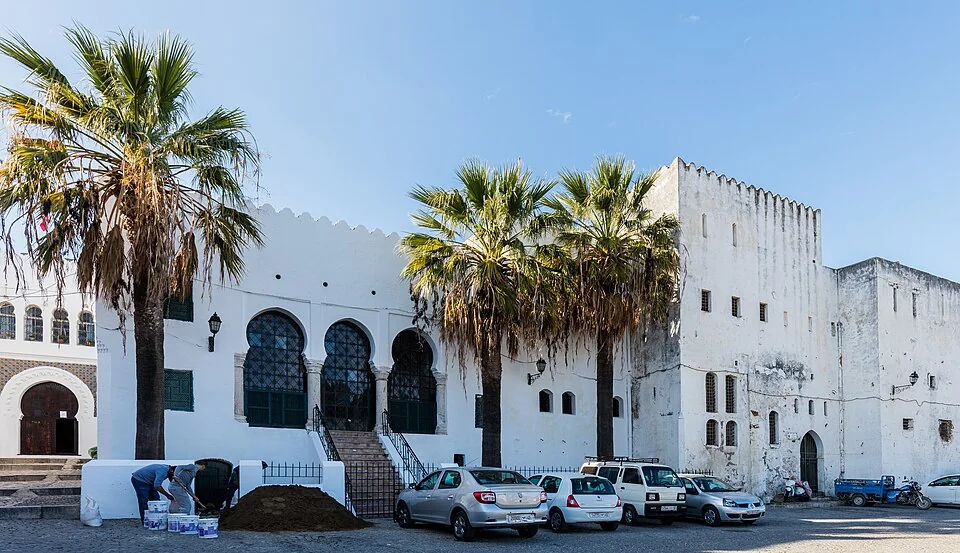
Palms in front of white walls in Tangier’s kasbah.
Diego DelsoSourceCC BY-SA 4.0

Palms in front of white walls in Tangier’s kasbah.

Walk uphill from the Grand Socco through the medina to the Kasbah. Save the Atlantic headland for a separate outing, and check which of Tangier’s ports or stations is on your ticket.

From the square to the Kasbah

Enter the medina from the Grand Socco and continue through the Petit Socco towards the Kasbah. These are residential lanes as well as a walking route. Keep doorways clear and ask before photographing people. In the Kasbah, the contemporary art museum occupies the former prison. A few doors away, Dar El Makhzen, the former sultan’s palace, houses the Museum of Mediterranean Cultures. The American Legation is another stop inside the medina. Choose your collection and check its opening times.

A separate trip to the Atlantic

Cap Spartel and the Caves of Hercules lie outside the city. Arrange the journey back before leaving the medina. For another day, Asilah has an Atlantic medina, Tetouan sits at the foot of the Rif, and Chefchaouen takes you into the mountains.

Know where you arrive

Tanger Ville railway station, the city cruise port and Tanger Med are three different arrival points. Give your driver the name on your ticket. If you are staying in the medina, ask which gate the car can reach and who can meet you there with your luggage.

Tangier

Rabat

Stop 2
A guard in red at the Mausoleum of Mohammed V in Rabat.
Petar Milošević This photograph was taken with a Panasonic Lumix DMC-G85/G80SourceCC BY-SA 4.0

A guard in red at the Mausoleum of Mohammed V in Rabat.

At the mouth of the Bou Regreg, Rabat’s kasbah looks across to Salé. Walk from the medina to the river, then choose between the Hassan esplanade and the archaeological grounds of Chellah.

Coming by rail, check the station on your ticket. The walk from Rabat-Ville station towards the kasbah pairs the streets of the modern capital with the lanes of the medina. At the Kasbah of the Udayas, follow the lanes to the river lookout. Salé stands on the opposite bank and deserves a separate stop.

The unfinished Hassan Tower and the Mausoleum of Mohammed V share an esplanade, so visit them together. Chellah is a separate, ticketed site outside the city walls, with Roman streets and a Marinid burial ground. Choose it for a closer look at the city’s earlier layers.

Rabat

Casablanca

Stop 3
The Hassan II Mosque beside the Atlantic in Casablanca.
Gabriel GarciaSourceLicense

The Hassan II Mosque beside the Atlantic in Casablanca.

The ocean terrace of the Hassan II Mosque, the arcades of the Habous quarter and the seafront at Aïn Diab are three different parts of Casablanca. Choose the one that fits the time you have in the city.

Mosque or neighbourhood walk

For an interior visit to the Hassan II Mosque, check the foundation’s guided tour times before crossing town. For a walk with less clock-watching, start at the arcades of the Habous quarter and explore its booksellers and shops on foot.

The Atlantic and the airport

Head west to Aïn Diab for a promenade by the ocean. If you are landing at Mohammed V, compare the city stations in the airport rail guide with your accommodation address before choosing where to get off.

Casablanca

Marrakech

Stop 4
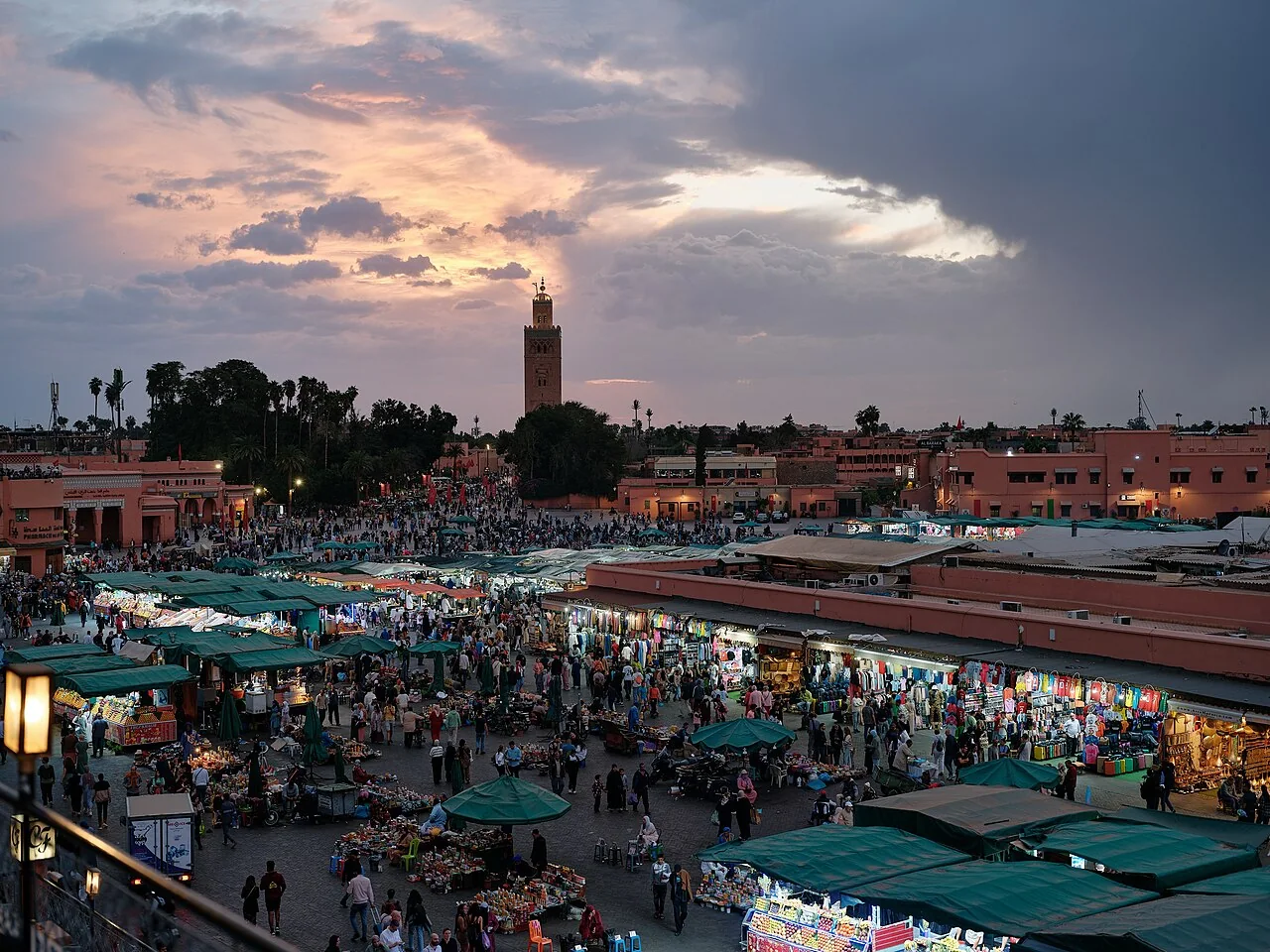
Market stalls fill Jemaa el-Fnaa at dusk, Marrakech.
HerokkSourceCC BY-SA 4.0

Market stalls fill Jemaa el-Fnaa at dusk, Marrakech.

From Jemaa el Fna, head north for the old college and souks, or south for palaces and royal tombs. Leave the gardens outside the walls for a separate outing.

Two walks from the square

Find Jemaa el Fna and look for the minaret of the Koutoubia to get your bearings. Marrakech grew from an eleventh-century Almoravid settlement. On the northern walk, the lanes of the souks lead towards the tilework and carved plaster of Ben Youssef Madrasa. For a craft visit, ask whether you will make something, watch a demonstration or visit a shop. Ask before photographing a workshop.

Palaces south of the medina

Choose the open courts and ruined walls of El Badi Palace, the carved decoration of the Saadian Tombs, or the rooms and gardens of Bahia Palace. Check the entrance for the visit you pick. Between sites, the lanes are also people's routes home. Leave doorways clear when stopping with a group.

A garden beyond the walls

For Jardin Majorelle, get your ticket through the garden’s official online ticket office before setting out. For water, olive trees and long views, choose the Menara gardens. Around Guéliz and Hivernage the broad streets make for a different walk from the medina. Allow time to cross town for a reservation.

Marrakech

Beni Mellal

Stop 5
Sunset reflected in water at Beni Mellal.
MehchafSourceCC BY-SA 4.0

Sunset reflected in water at Beni Mellal.

Aïn Asserdoun, above Beni Mellal, gives a view over the Tadla plain. If you are continuing to Bin El Ouidane, allow a separate stretch of mountain driving after the spring stop.

Beni Mellal

Fès

Stop 6
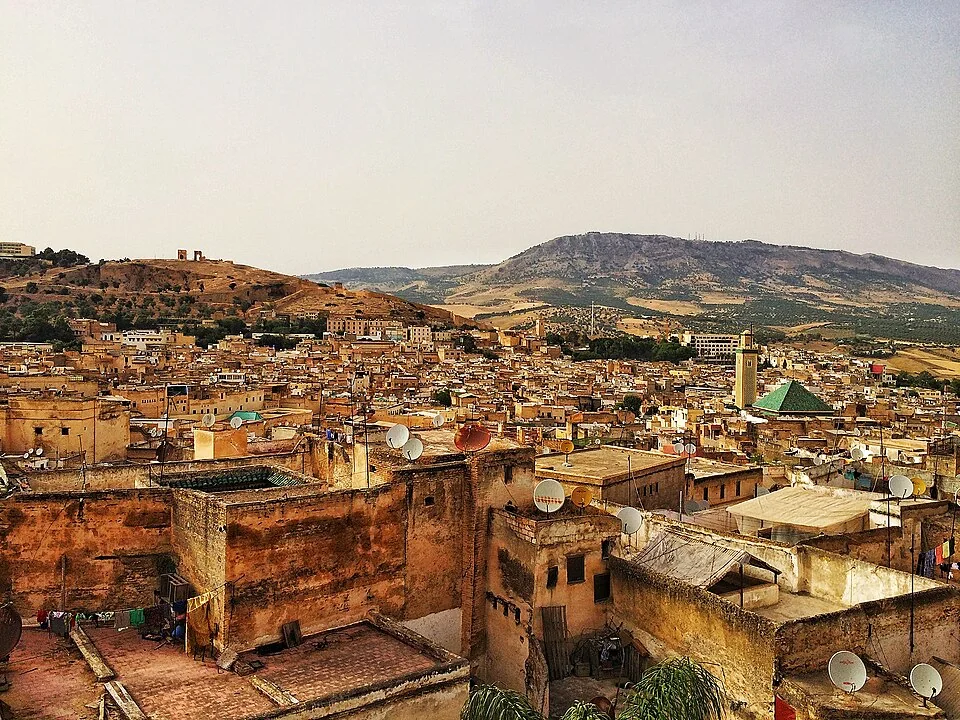
Rooftops across the medina of Fès.
Sim BrSourceCC BY-SA 2.0

Rooftops across the medina of Fès.

Start at Bab Boujloud to explore Fès el-Bali on foot. Beyond the old city, the gardens of Jnan Sbil lead towards the later quarter of Fès el-Jdid.

Arriving by rail? Use the station-to-medina guide to choose a gate where a vehicle can stop, then ask your host for the walking route to your door. Just inside Bab Boujloud, the courtyard of Bou Inania Madrasa brings carved cedar, stucco and tilework together.

Further into the lanes, the Nejjarine Museum shows the woodworker’s craft in a former caravanserai. If you want a second walk with a different rhythm, return towards Bab Boujloud and continue west to the Jnan Sbil gardens, between Fès el-Bali and Fès el-Jdid.

Fès

Oujda

Stop 7
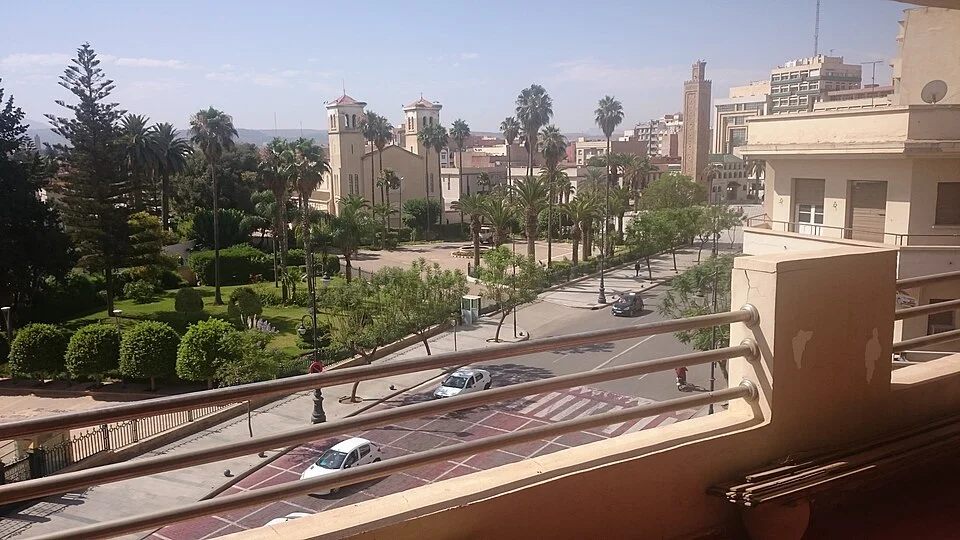
A tree-lined square in central Oujda.
TheNegativeOne47SourceCC BY-SA 4.0

A tree-lined square in central Oujda.

Explore Oujda’s medina, gates and public spaces as an eastern Moroccan city visit, then choose a separate Mediterranean or oasis extension. Plan the exact arrival and onward trip before adding distance.

Begin with the city itself

Oujda offers an eastern Moroccan urban visit that deserves more than a transfer between an arrival terminal and the coast. Start with the medina, its gates and the public spaces that interest you. Choose a connected walk and leave time for food shopping, a café pause and ordinary streets between the sights.

The medina and city gardens provide different ways to shape an outing. If history or architecture is your main interest, arrange a walk that explains specific places rather than simply promising a complete tour. Check the current access of any interior before planning the day around it.

Use the gates and gardens to orient the visit

Bab Al Gharbi and Bab Sidi Abdelouahab give the old town two named points of reference. Start by understanding where they sit in relation to your walk, then let the intervening streets become part of the visit. The Sebti Palace adds an architectural interest, while Lalla Aicha Park offers a different, greener urban setting. These are distinct reasons to spend time in Oujda before continuing toward the coast.

Choose a city walk for what you want to notice: gates and street patterns, everyday food shopping or public spaces. Keep the focus on Oujda itself for part of the stay. A Mediterranean holiday in Saidia and an inland oasis journey to Figuig may both begin with an Oujda arrival, but neither substitutes for exploring the city through which you are passing.

Make food and shopping part of the visit

Use regional food entries to recognise ingredients or dishes you want to understand. Ask a venue what it is preparing and describe any dietary needs. A culinary tradition is a reason to explore, but it does not establish today’s menu at a particular address.

In markets and working streets, ask before close photographs and keep space for people shopping or delivering goods. A craft demonstration, a retail visit and a hands-on session are different experiences; agree the purpose and any payment before taking part.

Oujda

Guercif

Stop 8
Snow on trees and roofs beside a street in Guercif.
YahyamarocainSourceCC BY-SA 3.0

Snow on trees and roofs beside a street in Guercif.

Guercif lies on the route between Taza and Oujda. If you are turning north towards Nador, agree which onward road you are taking before leaving the town centre. Its cafés make a practical meeting point.

Guercif

Midelt

Stop 9
Jbel Ayachi rises behind the rooftops of Midelt.
Innocentsabroad at English WikipediaSourcePublic domain

Jbel Ayachi rises behind the rooftops of Midelt.

Apple orchards surround Midelt on the high plateau between the Middle and High Atlas. It makes a useful overnight break on the road from Fes to the Ziz Valley.

Breaking the crossing

From Azrou, Midelt gives you somewhere to eat, refuel and look at the onward road before the descent towards Errachidia. In winter, ask about the mountain road before committing to a late departure.

If you have time in town

Look for locally grown apples in season. Continuing to Merzouga takes you beyond the plateau and the Ziz Valley to the edge of Erg Chebbi. Allow for that onward journey when arranging a camp pickup.

Midelt

Errachidia

Stop 10
Errachidia’s rooftops below a flat-topped ridge.
HSTG1SourceCC BY-SA 4.0

Errachidia’s rooftops below a flat-topped ridge.

At Errachidia the mountain crossing from Midelt opens onto the Ziz Valley and the southbound road towards Erfoud. Palm groves follow the river through an otherwise dry landscape.

Seeing the Ziz

If you want a view into the valley, pick a roadside stopping place with room to pull off. For a closer look at the oasis, use a village path or arrange a walk with someone who knows the gardens. The spring at Meski is a separate stop on the valley road.

An onward pickup

Some trips end in Errachidia and others continue through Erfoud to Merzouga. Confirm the town on your ticket or transfer booking before arranging to meet a driver at the dunes.

Errachidia

Ouarzazate

Stop 11
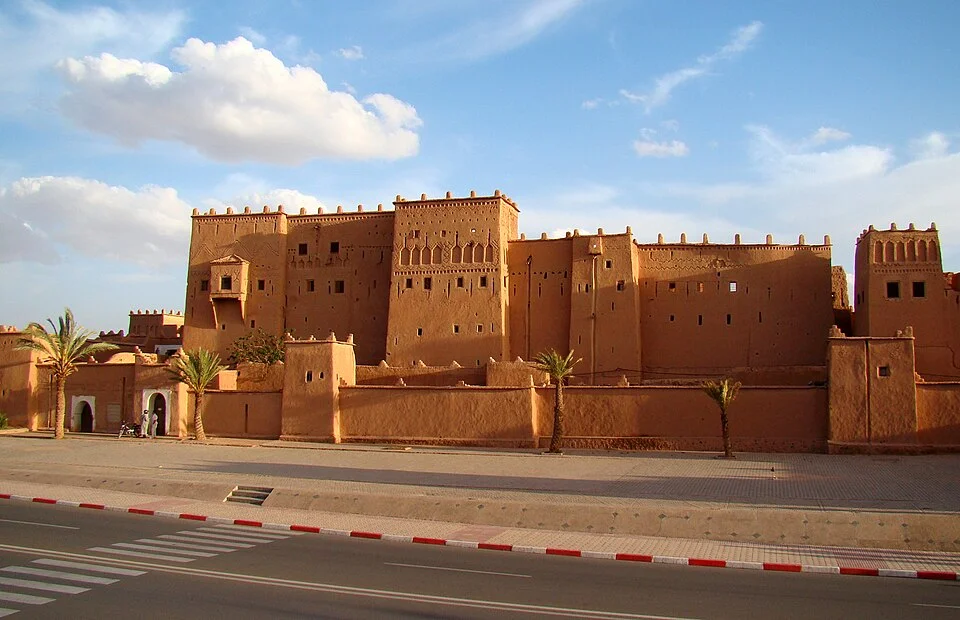
The earthen towers of Kasbah Taourirt in Ouarzazate.
Bjørn Christian TørrissenSourceCC BY-SA 3.0

The earthen towers of Kasbah Taourirt in Ouarzazate.

Ouarzazate pairs a fortified earthen residence with the history of Moroccan film. Aït Ben Haddou and the Draa Valley are reached on different roads out of town.

Two places facing each other

Begin at Taourirt Kasbah. Check which rooms are accessible before paying for an interior visit. The Cinema Museum is across the road. Part of it was damaged by fire in 2024, so confirm that visitors can enter before setting aside time for it.

Choose a road out of town

For lanes and buildings of rammed earth, travel northwest to Aït Ben Haddou. For the palm oases of the Draa, take the road south towards Agdz. The two trips lead in different directions.

Ouarzazate

Agadir

Stop 12
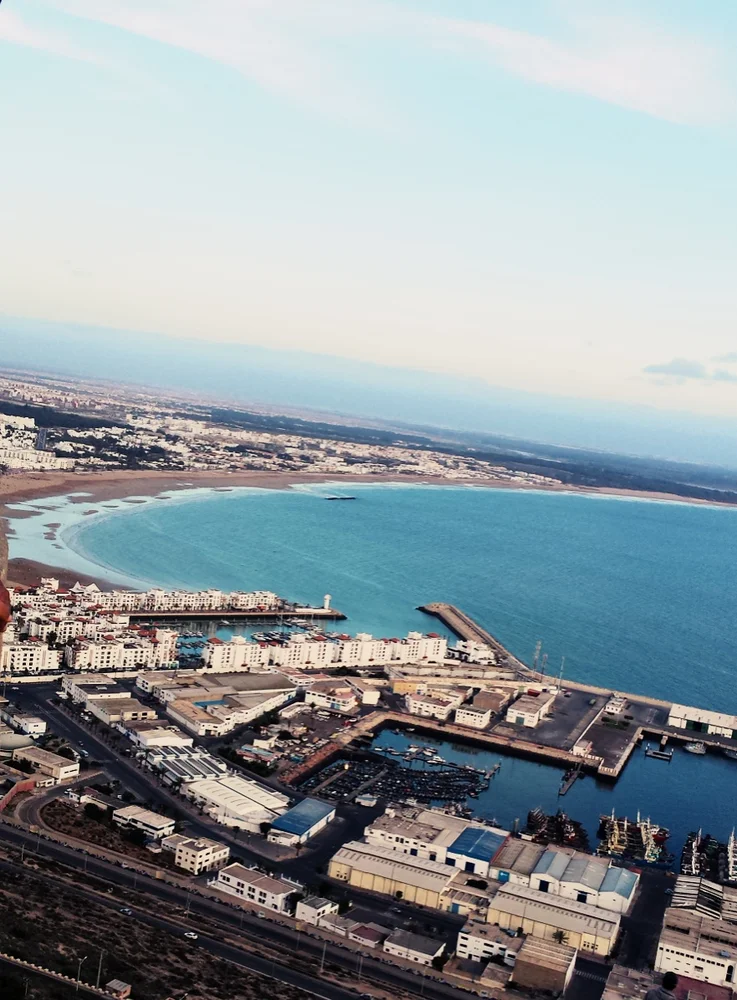
Agadir’s bay and port seen from Agadir Oufella.
Loubna zenfouhSourceCC BY-SA 4.0

Agadir’s bay and port seen from Agadir Oufella.

Agadir’s beach follows the bay below the hilltop kasbah. Stay by the water for a promenade walk, go inland for the covered market, or head north to Taghazout for a day built around the surf.

The old city above the bay

At Agadir Oufella, raised wooden walkways follow streets of the citadel destroyed in the 1960 earthquake. Choose the interior visit for that history or the hilltop for a view over the rebuilt city and fishing port. The cable car reaches the hill. Check what your ticket includes before you set off.

Market, neighbourhood or surf

At Souk El Had, note your entrance gate before you explore the produce, spices and household goods. Choose Talborjt for cafés and a neighbourhood meal. For a surf lesson in Taghazout, confirm the meeting beach with your school and arrange the ride back. Taghazout is a separate coastal village north of Agadir.

Agadir

Guelmim

Stop 13
A red truck approaches the arched road gate at Guelmim.
LARREY JérémySourcePublic domain

A red truck approaches the arched road gate at Guelmim.

Guelmim lies inland from Sidi Ifni. The town works as a supply stop before a stay among the date palms at Tighmert or a longer journey to the southern Atlantic coast.

Town and oasis

The market and cafés are in Guelmim itself. Tighmert is an inhabited oasis in Aserir commune. Arrange a meal or a garden visit with a host there and give your driver the village name when you leave Guelmim.

Choosing the coast road

Sidi Ifni brings you to a clifftop town with streets and services by the sea. Plage Blanche is an extended stretch of remote coast. Choose the access point and a way back before setting off for the beach.

Guelmim

Tan-Tan

Stop 14
Wind-shaped dune ridges in the Tan-Tan area.
Moussa IdrissiSourceLicense

Wind-shaped dune ridges in the Tan-Tan area.

Tan-Tan is the inland town on the southern road. For a night by the ocean, look for El Ouatia, also called Tan-Tan Plage. Check which name appears on your lodging address before leaving the main road.

Tan-Tan

Laayoune

Stop 15
Fishing boats moored at the port of Laâyoune.
YoTuT from United StatesSourceCC BY 2.0

Fishing boats moored at the port of Laâyoune.

If you are heading for the Atlantic, make your overnight address clear. Laayoune is inland, Foum El Oued is the beach, and El Marsa is the port. A booking in the city leaves another journey to the shore.

Laayoune

Road map

The stop map is not available yet.

Tangier