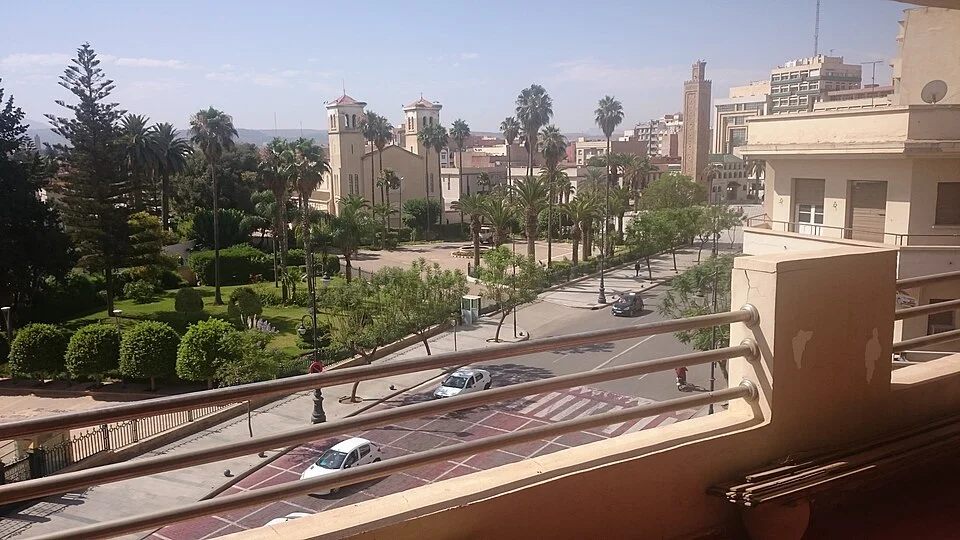
A tree-lined square in central Oujda.
Explore Oujda’s medina, gates and public spaces as an eastern Moroccan city visit, then choose a separate Mediterranean or oasis extension. Plan the exact arrival and onward trip before adding distance.
Things to do
Grand Mosque of Oujda · Lalla Meryem Park Cultural Garden
Things to do
Grand Mosque of Oujda · Lalla Meryem Park Cultural Garden- Grand Mosque of Oujda
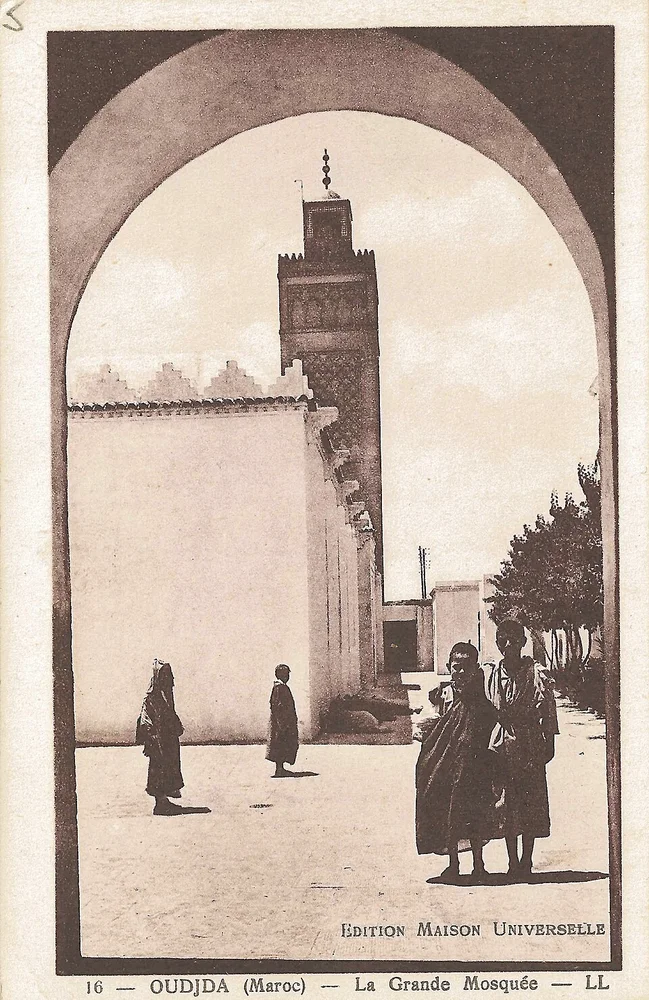 Archive photographPhotoEditions Maison Universelle - Lévy et Neurdein réunis 44 rue Letellier Paris Imp.SourcePublic domain
The Grand Mosque anchors Oujda's Marinid chapter within a medina that has been rebuilt many times. Founded under Sultan Abu Yaqub Yusuf at the end of the thirteenth century, it retains a hypostyle plan and a decorated square minaret that can be read from public approaches.
- Lalla Meryem Park Cultural Garden
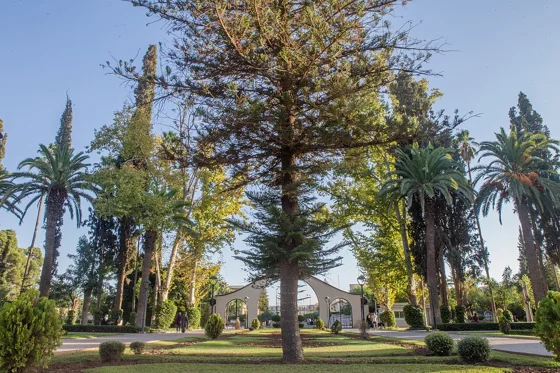
Lalla Meryem Park is a breathing space beside Oujda's old city and a useful hinge between monuments, music and everyday urban life. Rather than market it as a botanical garden with guaranteed displays, a guide should read its civic role: shaded movement, family recreation, cultural facilities and the transition from medina walls to the modern boulevards.
- Al Gazzara (Boucherie)
Market · Oujda-Angad
- Dar Sebti Gharnati Music House
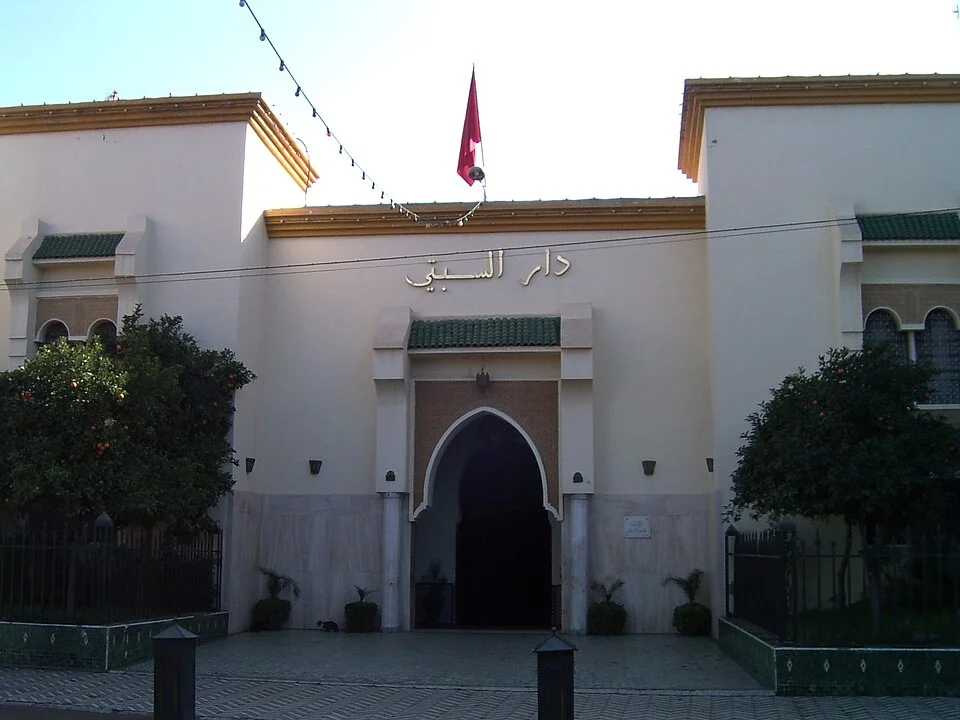
Dar Sebti gives Oujda's music history an architectural address. Built as an urban palace in the twentieth century and later restored, the house is associated with study and programming around Gharnati music, Oujda's Andalusian repertoire. A worthwhile visit listens before it labels: an authorized musician or researcher can introduce rhythmic suites, instruments and the relationship with traditions across the wider Maghreb, while the courtyard and reception rooms show how music inhabits social space.
Food
Kaak Oujdi · Karane Oujda
Food
Kaak Oujdi · Karane Oujda- Kaak Oujdi
Kaak Oujdi is the eastern Moroccan ring bread or biscuit perfumed with anise, cardamom and toasted sesame. Depending on the bakery, it can be crisp and dry or more brioche-like, but the ring shape and spice profile connect it to Oujda, Berkane and Taourirt. The dough is kneaded, formed into loops, proofed when yeast is used, then baked until the sesame is fragrant and the crust holds up to dipping in tea.
- Karane Oujda
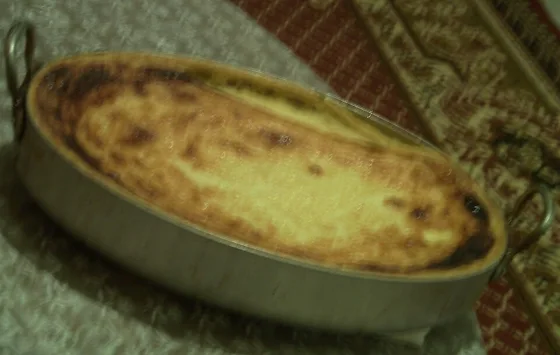
A chickpea-flour street-food speciality associated with Oujda and the eastern region.
Stays
Armel · Chafik
Stays
Armel · Chafik- Armel
Guest house · Oujda-Angad
- Chafik
Hotel · Oujda-Angad · 12 Boulevard Bir Anzarene
- Chic Hôtel
Hotel · Oujda-Angad · 34 Rue Ramadan Al Gadi
- Dar Al Fassia
Guest house · Oujda-Angad · 2 Rue Tiflet
Getting around
Exploring the Oriental region with a driver · From Oujda Airport to Saïdia and Marchica
Getting around
Exploring the Oriental region with a driver · From Oujda Airport to Saïdia and Marchica- Exploring the Oriental region with a driver
Exploring the Oriental region with a driver is in Oujda, Oriental.
- From Oujda Airport to Saïdia and Marchica
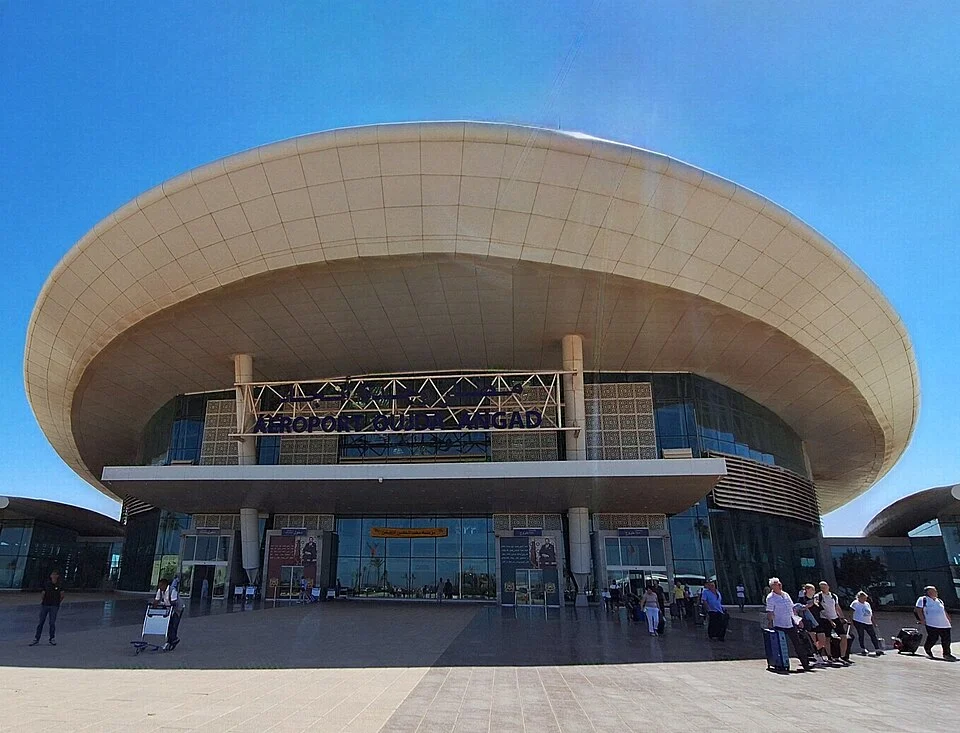
Use Oujda Angads Airport for a stay in Oujda or an independently arranged road transfer to Saïdia or the Marchica area. Check the flight date, final address, luggage and pickup details before travelling.
- Aéroport international d'Oujda-Angad
Airport · Oujda-Angad · IATA OUD
- Gare Routière d'Oujda
Bus station · Oujda-Angad
Trip ideas
Almeria Ferry Terminal to Nador via Beni Ensar Port, Saidia, Oujda · 6-day itinerary · Tangier to Oujda via Chefchaouen, Al Hoceima, Saidia · 6-day itinerary
Trip ideas
Almeria Ferry Terminal to Nador via Beni Ensar Port, Saidia, Oujda · 6-day itinerary · Tangier to Oujda via Chefchaouen, Al Hoceima, Saidia · 6-day itinerary- Almeria Ferry Terminal to Nador via Beni Ensar Port, Saidia, Oujda · 6-day itinerary
Travel from Almeria Ferry Terminal to Nador, visiting Beni Ensar Port, Saidia and Oujda. 6 stops across 6 days.
- Tangier to Oujda via Chefchaouen, Al Hoceima, Saidia · 6-day itinerary
Travel from Tangier to Oujda, visiting Chefchaouen, Al Hoceima, Saidia and Berkane. 6 stops across 6 days.
- Oujda with Bouarfa, Figuig · 8-day itinerary
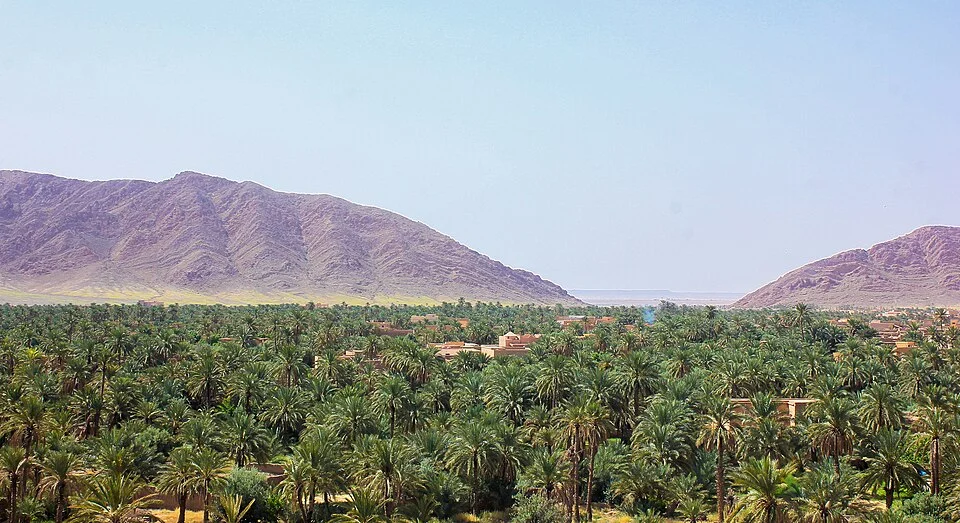
Start and finish in Oujda, visiting Bouarfa and Figuig. 5 stops across 8 days.
- Oujda with Berkane, Tafoughalt, Saidia · 8-day itinerary

Start and finish in Oujda, visiting Berkane, Tafoughalt, Saidia, Nador, Jerada and Al Hoceima. 8 stops across 8 days.
About Oujda
Begin with the city itself
Oujda offers an eastern Moroccan urban visit that deserves more than a transfer between an arrival terminal and the coast. Start with the medina, its gates and the public spaces that interest you. Choose a connected walk and leave time for food shopping, a café pause and ordinary streets between the sights.
The medina and city gardens provide different ways to shape an outing. If history or architecture is your main interest, arrange a walk that explains specific places rather than simply promising a complete tour. Check the current access of any interior before planning the day around it.
Use the gates and gardens to orient the visit
Bab Al Gharbi and Bab Sidi Abdelouahab give the old town two named points of reference. Start by understanding where they sit in relation to your walk, then let the intervening streets become part of the visit. The Sebti Palace adds an architectural interest, while Lalla Aicha Park offers a different, greener urban setting. These are distinct reasons to spend time in Oujda before continuing toward the coast.
Choose a city walk for what you want to notice: gates and street patterns, everyday food shopping or public spaces. Keep the focus on Oujda itself for part of the stay. A Mediterranean holiday in Saidia and an inland oasis journey to Figuig may both begin with an Oujda arrival, but neither substitutes for exploring the city through which you are passing.
Make food and shopping part of the visit
Use regional food entries to recognise ingredients or dishes you want to understand. Ask a venue what it is preparing and describe any dietary needs. A culinary tradition is a reason to explore, but it does not establish today’s menu at a particular address.
In markets and working streets, ask before close photographs and keep space for people shopping or delivering goods. A craft demonstration, a retail visit and a hands-on session are different experiences; agree the purpose and any payment before taking part.
Choose a separate coastal stay
Saidia gives the trip a Mediterranean beach focus. Nador offers a different setting around Marchica. Look at the exact destination and approach rather than treating the entire northern shore as one neighbourhood of Oujda. If the coast is the priority, compare whether staying there reduces repeated transfers.
Figuig belongs to a separate oasis trip inland. Add it because you want time to explore that landscape, with suitable travel stages, rather than as an incidental detour from a seaside holiday.
Connect your arrival to the whole day
Match the airport, railway station or coach stop in your connection to your accommodation. Include luggage, the final local trip and check-in when deciding how much to plan after arrival. Use measured road distances for driving comparisons and dated operator references for transport options, then verify the service for your actual date. The two kinds of information answer different travel questions.