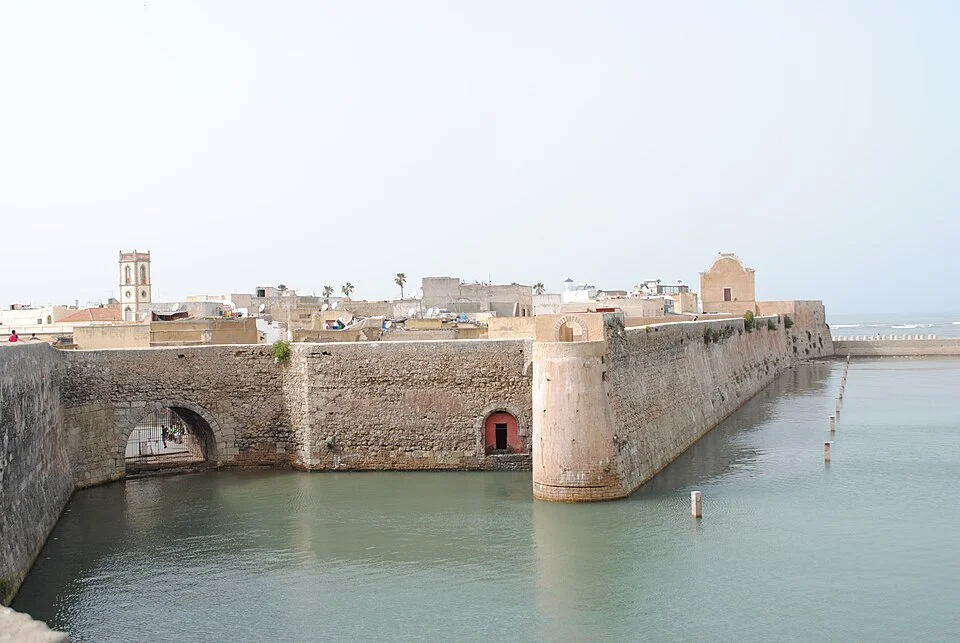
The sea walls of El Jadida’s fortress.
Scenery on the wayM.RaisSourceCC BY-SA 3.0
Trip idea

Morocco UNESCO Heritage Circuit in 16 Days

Tangier 16 days
Map

The sea walls of El Jadida’s fortress.

Morocco UNESCO Heritage Circuit in 16 Days connects Tangier, Tetouan, Fes.

Along the itinerary

Morocco UNESCO Heritage Circuit in 16 Days is a 16-day, 15-night multi-stop itinerary built around Morocco's inscribed urban and archaeological properties linked in a sequence that distinguishes World Heritage from tentative or nearby setting.

The circuit moves from northern medinas through Fes, Meknes and Volubilis, follows the Atlantic to Rabat and Mazagan, then closes with Marrakech, Ait Ben Haddou and Essaouira; each property is presented with its exact UNESCO status.

Along this route

Stops photographed · 10 / 10

Stop guides

Tangier

Stop 1
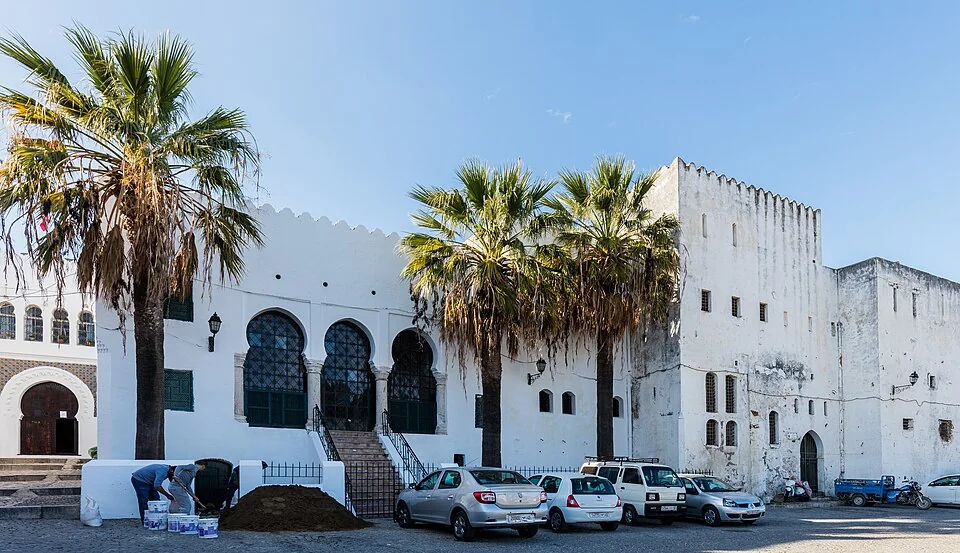
Palms in front of white walls in Tangier’s kasbah.
Diego DelsoSourceCC BY-SA 4.0

Palms in front of white walls in Tangier’s kasbah.

Walk uphill from the Grand Socco through the medina to the Kasbah. Save the Atlantic headland for a separate outing, and check which of Tangier’s ports or stations is on your ticket.

From the square to the Kasbah

Enter the medina from the Grand Socco and continue through the Petit Socco towards the Kasbah. These are residential lanes as well as a walking route. Keep doorways clear and ask before photographing people. In the Kasbah, the contemporary art museum occupies the former prison. A few doors away, Dar El Makhzen, the former sultan’s palace, houses the Museum of Mediterranean Cultures. The American Legation is another stop inside the medina. Choose your collection and check its opening times.

A separate trip to the Atlantic

Cap Spartel and the Caves of Hercules lie outside the city. Arrange the journey back before leaving the medina. For another day, Asilah has an Atlantic medina, Tetouan sits at the foot of the Rif, and Chefchaouen takes you into the mountains.

Know where you arrive

Tanger Ville railway station, the city cruise port and Tanger Med are three different arrival points. Give your driver the name on your ticket. If you are staying in the medina, ask which gate the car can reach and who can meet you there with your luggage.

Tangier

Tetouan

Stop 2
Lights across Tétouan after dark.
IdeophagousSourceCC BY-SA 4.0

Lights across Tétouan after dark.

Tétouan sits at the foot of the Rif. Walk through the working medina to see the city's Andalusian inheritance, then step outside the walls to compare it with the Spanish-era streets.

Inside the medina

Enter a shop or workshop that welcomes visitors. At Dar El Oddi, a restored family house, historic images show how artists and visitors pictured Tétouan. Its woodwork and tiles are part of the visit.

Two routes out of town

Choose Martil for an afternoon on the Mediterranean or Chefchaouen for a separate stay in the mountains. Check the return ride before leaving the city.

Tetouan

Fès

Stop 3
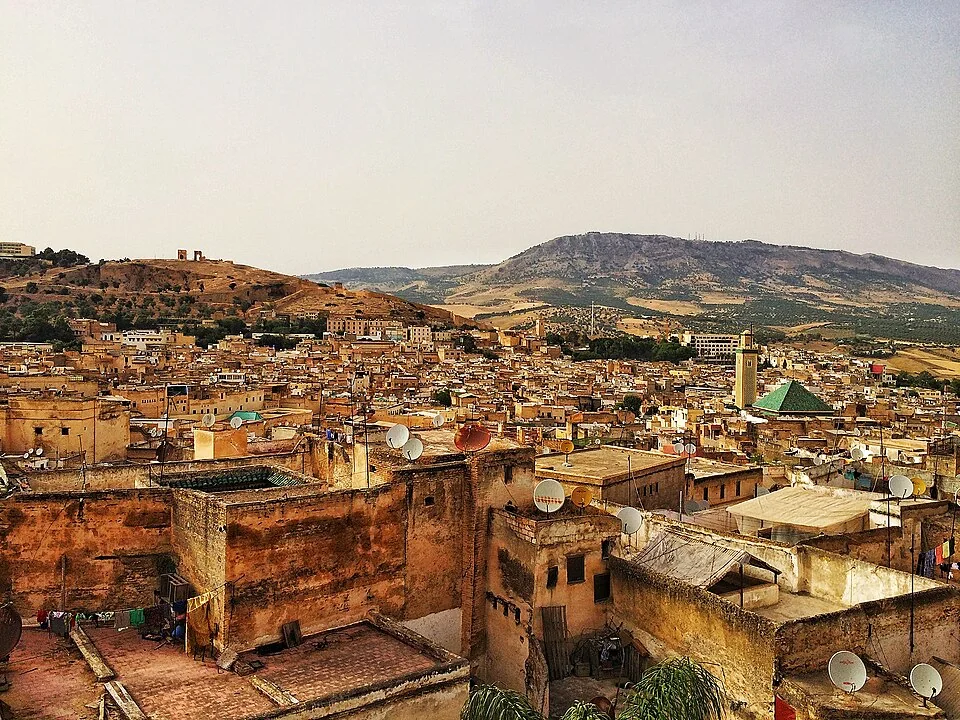
Rooftops across the medina of Fès.
Sim BrSourceCC BY-SA 2.0

Rooftops across the medina of Fès.

Start at Bab Boujloud to explore Fès el-Bali on foot. Beyond the old city, the gardens of Jnan Sbil lead towards the later quarter of Fès el-Jdid.

Arriving by rail? Use the station-to-medina guide to choose a gate where a vehicle can stop, then ask your host for the walking route to your door. Just inside Bab Boujloud, the courtyard of Bou Inania Madrasa brings carved cedar, stucco and tilework together.

Further into the lanes, the Nejjarine Museum shows the woodworker’s craft in a former caravanserai. If you want a second walk with a different rhythm, return towards Bab Boujloud and continue west to the Jnan Sbil gardens, between Fès el-Bali and Fès el-Jdid.

Fès

Meknes

Stop 4
A pedestrian beneath an arch outside the royal palace in Meknès.
Adam Jones, Ph.D.SourceCC BY-SA 3.0

A pedestrian beneath an arch outside the royal palace in Meknès.

In Meknès the imperial city meets the medina at Place El Hedim. The monuments here, the Roman remains at Volubilis and the hill town of Moulay Idriss are three distinct stops.

El Hedim and Bab Mansour

Start at Bab Mansour and the medina. From the square, look at the monumental gate before turning into the market streets. Check access on the day if there is a particular monument you want to enter.

Outside Meknès

Walk the Roman streets and look for the mosaics at Volubilis, then leave time for the steep lanes of Moulay Idriss Zerhoun. Both need transport back to Meknès. If your next overnight stop is Fès, allow for that onward journey as well.

Meknes

Volubilis

Stop 5
Stone columns at the ruins of Volubilis.
Marcin Sochacki (Wanted)SourceCC BY-SA 4.0

Stone columns at the ruins of Volubilis.

Volubilis preserves Roman streets, monuments and mosaic floors near Moulay Idriss Zerhoun. Its history reaches beyond Rome, from the ancient kingdom of Mauretania to the early Islamic period.

Follow the remains of homes and public buildings to understand the city’s layout, then connect the visit with nearby Moulay Idriss Zerhoun. UNESCO listed the archaeological site in 1997.

Volubilis

Rabat

Stop 6
A guard in red at the Mausoleum of Mohammed V in Rabat.
Petar Milošević This photograph was taken with a Panasonic Lumix DMC-G85/G80SourceCC BY-SA 4.0

A guard in red at the Mausoleum of Mohammed V in Rabat.

At the mouth of the Bou Regreg, Rabat’s kasbah looks across to Salé. Walk from the medina to the river, then choose between the Hassan esplanade and the archaeological grounds of Chellah.

Coming by rail, check the station on your ticket. The walk from Rabat-Ville station towards the kasbah pairs the streets of the modern capital with the lanes of the medina. At the Kasbah of the Udayas, follow the lanes to the river lookout. Salé stands on the opposite bank and deserves a separate stop.

The unfinished Hassan Tower and the Mausoleum of Mohammed V share an esplanade, so visit them together. Chellah is a separate, ticketed site outside the city walls, with Roman streets and a Marinid burial ground. Choose it for a closer look at the city’s earlier layers.

Rabat

El Jadida

Stop 7
The sea walls of El Jadida’s fortress.
M.RaisSourceCC BY-SA 3.0

The sea walls of El Jadida’s fortress.

The fortified Portuguese town of Mazagan lies inside today's El Jadida. Start at the Atlantic-facing walls to understand how the former port defended its approach from the sea.

Inside the fortifications

Trace the bastions and streets on foot. The vaulted Portuguese cistern is a separate interior visit. Check access for your date before making it the centre of the walk.

Along the coast

North of El Jadida, Azemmour has an old town beside the Oum Er-Rbia river. To the south, Oualidia faces a lagoon. Pick the direction that fits your next overnight stop.

El Jadida

Marrakech

Stop 8
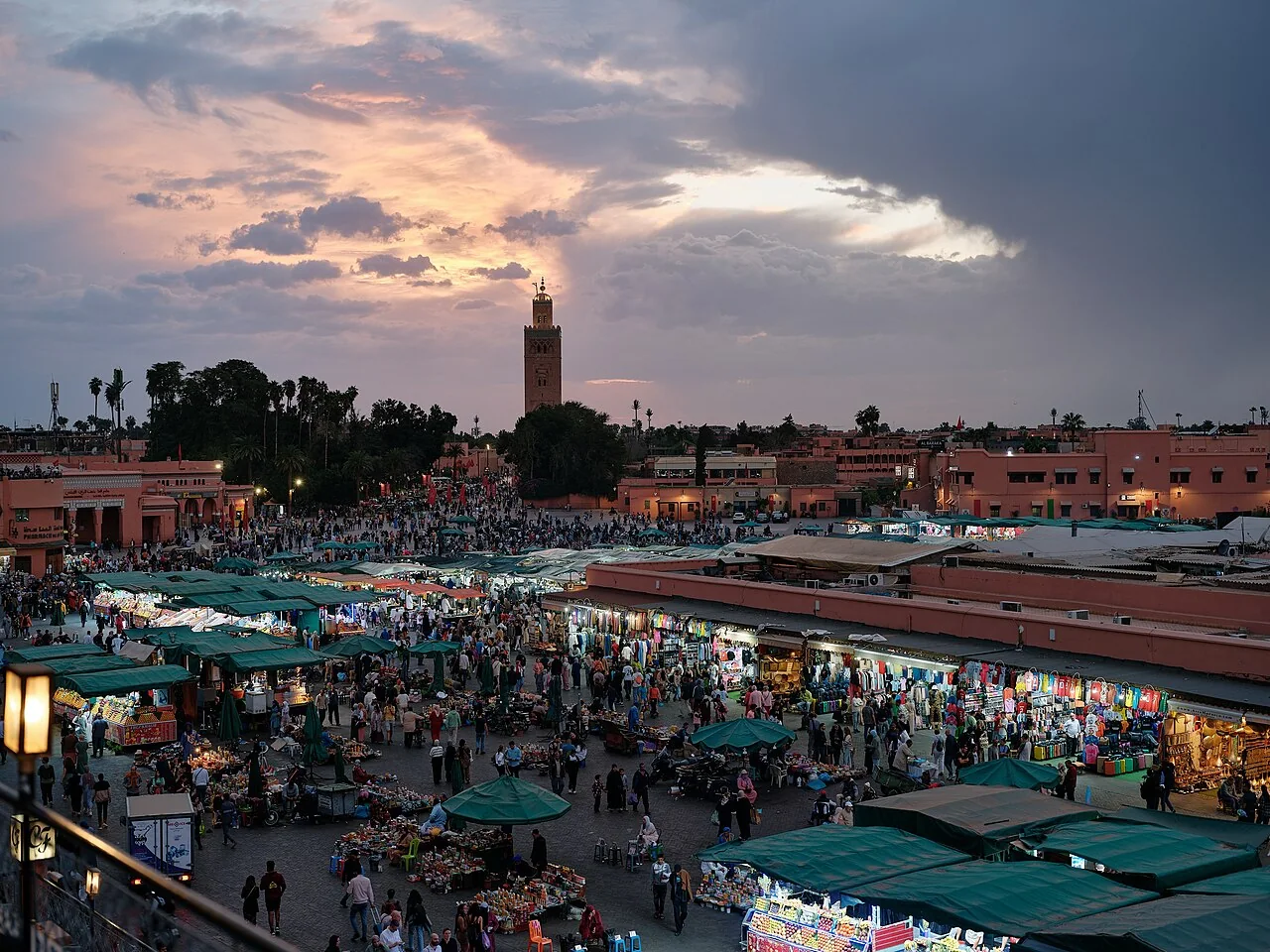
Market stalls fill Jemaa el-Fnaa at dusk, Marrakech.
HerokkSourceCC BY-SA 4.0

Market stalls fill Jemaa el-Fnaa at dusk, Marrakech.

From Jemaa el Fna, head north for the old college and souks, or south for palaces and royal tombs. Leave the gardens outside the walls for a separate outing.

Two walks from the square

Find Jemaa el Fna and look for the minaret of the Koutoubia to get your bearings. Marrakech grew from an eleventh-century Almoravid settlement. On the northern walk, the lanes of the souks lead towards the tilework and carved plaster of Ben Youssef Madrasa. For a craft visit, ask whether you will make something, watch a demonstration or visit a shop. Ask before photographing a workshop.

Palaces south of the medina

Choose the open courts and ruined walls of El Badi Palace, the carved decoration of the Saadian Tombs, or the rooms and gardens of Bahia Palace. Check the entrance for the visit you pick. Between sites, the lanes are also people's routes home. Leave doorways clear when stopping with a group.

A garden beyond the walls

For Jardin Majorelle, get your ticket through the garden’s official online ticket office before setting out. For water, olive trees and long views, choose the Menara gardens. Around Guéliz and Hivernage the broad streets make for a different walk from the medina. Allow time to cross town for a reservation.

Marrakech

Aït Ben Haddou

Stop 9
The earthen towers of Ksar Aït Ben Haddou across the riverbed.
Petar MiloševićSourceCC BY-SA 4.0

The earthen towers of Ksar Aït Ben Haddou across the riverbed.

Aït Ben Haddou rises above the Ounila Valley near Ouarzazate. Inside its fortified walls, earthen houses, towers and shared spaces reveal how a ksar brings a community together. This architectural ensemble entered UNESCO’s World Heritage List in 1987. Walk the lanes and pause at viewpoints to see how the buildings follow the hillside.

Use the designated pedestrian crossing and check access after rain. Respect homes and restoration areas, and agree any house-entry or guide fee beforehand. Combine the visit with Ouarzazate or a separate itinerary through the Ounila Valley.

Aït Ben Haddou

Road map

The stop map is not available yet.

Tangier