Oudayas National Museum of Adornment
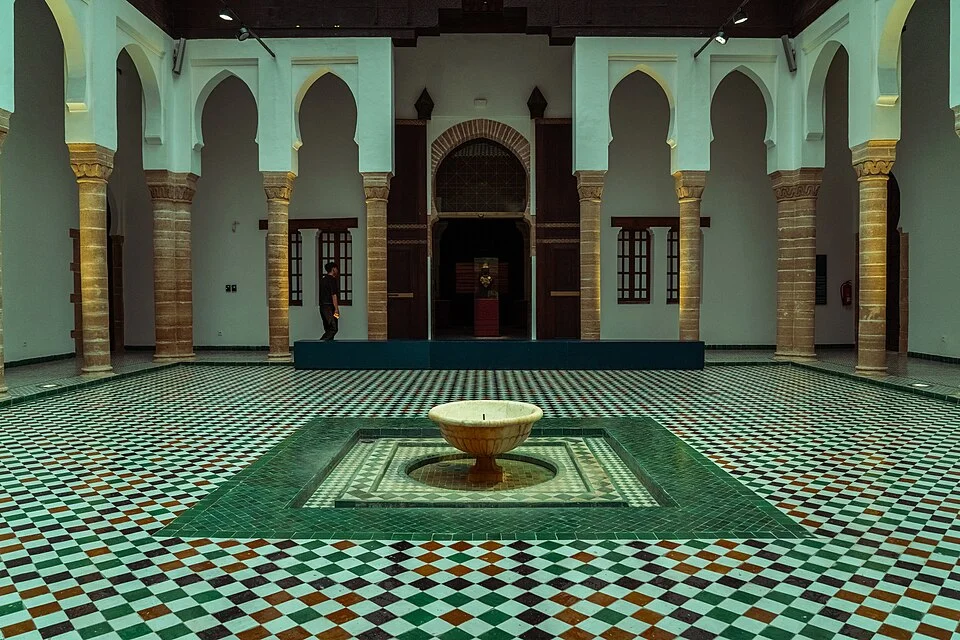
A fountain in the tiled courtyard of the Oudayas Museum in Rabat.
Inside the Udayas precinct, the National Museum of Adornment changes the scale of the visit from fortifications to the body. ” The museum's setting in the historic kasbah makes a useful two-part product: first examine how metal, textile and color carry meaning, then step outside to consider the wider Andalusian and Atlantic layers of Rabat. A responsible interpreter uses the labels and provenance supplied by the museum and avoids assigning ethnicity or ritual use from appearance alone. Current displays and garden access remain museum-controlled and must be checked.
Season and access
Confirm museum entrance, closure day and any kasbah circulation changes; narrow or stepped approaches need a mobility note.
Verified facts
Continue exploring
Kasbah of the Udayas · Rabat-Sale-Kenitra
- Jewellery and adornment at the Udayas
A jewelry historian or textile specialist leads this close-looking session inside the National Museum of Adornment. Participants learn to separate material, technique, form, provenance and museum interpretation instead of guessing a wearer's region or identity from appearance. Silver, enamel, beads, woven cloth and fastening systems become evidence for trade, skill and social use; exact objects depend on the current display.
- Ain Aouda
In Rabat-Sale-Kenitra, Ain Aouda connects rabat access and periurban.
- Kaak Rbati
Kaak Rbati is Rabat’s almond-centered interpretation of the kaak family. Culinary references distinguish it from dry anise rings by its almond-paste component, which can appear as a filling or define the biscuit’s richer texture. A careful maker balances ground almond, sugar and floral or citrus perfume against a thin wheat shell, then shapes a ring or another attributed Rabati form and bakes it without drying the center.